

How to Find Rare Records Online Before Other Collectors Do
Finding a record you have been searching for months—or even years—can be one of the most satisfying experiences in vinyl collecting. The challenge is that truly desirable records rarely stay unnoticed for long. Original pressings, out-of-print albums, unusual variants, limited editions, and exceptionally clean copies can attract attention quickly, especially when collectors around the world are searching for the same titles.
That makes knowing where to find rare vinyl records online only part of the equation. Successful record hunting also requires knowing what to search for, how to identify promising listings, how to distinguish genuine scarcity from marketing language, and how to recognize a desirable pressing before someone else does.
There is no guaranteed shortcut to finding every rare record first. However, collectors who develop good research habits can become much more efficient at recognizing opportunities.
Here is how to search for rare records online intelligently and build a collection based on knowledge rather than impulse.
Understand What “Rare” Actually Means
Before hunting for rare vinyl, it helps to define rarity correctly.
A record is not necessarily rare simply because it is old. Millions of copies were manufactured of some classic albums, and large numbers may still exist today. Conversely, a relatively recent release produced in a very small quantity can be considerably harder to find.
True scarcity can result from limited production, regional distribution, discontinued releases, withdrawn editions, promotional copies, unusual variants, or low survival rates.
Demand matters as well.
A record can be extraordinarily scarce but have limited commercial value if very few collectors want it. Another release might exist in larger numbers but command substantial prices because thousands of people are competing for available copies.
When searching for rare vinyl records for collectors, consider both sides of the equation: availability and demand.
Learn Pressings, Not Just Album Titles
One of the biggest differences between casual buyers and experienced collectors is how they search.
A casual buyer searches for an artist and album.
A serious collector may search for the artist, album, label, catalog number, country, release year, matrix variation, pressing plant, mastering engineer, vinyl color, or another edition-specific characteristic.
Why?
Because an album can have dozens—or even hundreds—of different vinyl editions.
A famous album might exist as an original U.S. pressing, UK first pressing, Japanese edition, European reissue, promotional copy, audiophile remaster, colored-vinyl edition, anniversary release, and numerous repressings.
They may share the same music while being completely different collectibles.
If you want to find rare vinyl records online, learn to search for the pressing rather than simply the album.
Build a Vinyl Want List Before You Shop
Random browsing can produce wonderful discoveries, but a structured want list makes serious collecting far more efficient.
Record the exact editions you want whenever possible. Instead of writing only an artist and album title, include identifying information such as the preferred country, label, catalog number, approximate release year, mono or stereo format, and any known pressing characteristics.
You can also record your acceptable condition and maximum budget. This preparation helps you react quickly when a copy appears.
If a scarce record suddenly becomes available, you do not want to begin researching the pressing from zero while another collector is already deciding whether to purchase it.
Do the research before the opportunity appears.
Search Using Catalog Numbers
Catalog numbers are among the most useful search terms in online record hunting. An album title can produce thousands of irrelevant results.
A catalog number may narrow the search dramatically. Suppose you are looking for one particular edition of an album that has been reissued repeatedly.
Searching the artist and title may show modern repressings, CDs, digital releases, merchandise, and unrelated editions. Adding the appropriate catalog number can bring you much closer to the pressing you actually want.
A vinyl record catalog number lookup can therefore be an important part of both research and discovery. Remember, however, that a catalog number does not always uniquely identify a pressing.
Some numbers were reused across repressings or related editions. Treat it as a powerful filter rather than absolute proof.
Learn How to Read Matrix and Runout Information
For difficult pressing identification, the runout area can be even more useful. The narrow space between the final groove and the center label may contain stamped or handwritten letters, numbers, symbols, and signatures.
These are commonly referred to as matrix or runout markings. They can help identify specific cuts, mastering information, manufacturing variations, or pressing details.
Collectors who understand how to read vinyl matrix numbers can sometimes recognize desirable editions that other buyers overlook.
For example, a seller might list an album simply as an “older pressing” without realizing that its runout information corresponds to a particularly sought-after variation.
Knowledge creates opportunity. Just remember that matrix conventions differ between labels and manufacturers, so always research the specific release.
Search for Misspellings and Incomplete Listings
Not every seller is a vinyl expert. That can occasionally work in a collector's favor. Some records are listed with misspelled artist names, incomplete titles, incorrect genres, missing catalog numbers, or vague descriptions.
These listings may attract fewer searches than accurately cataloged copies. Try reasonable spelling variations and abbreviated searches.
You can also search using only distinctive words from an album title or the catalog number without the artist's name. The objective is not to exploit a seller's mistake. It is simply to search beyond the obvious queries that every other collector may be using.
Look Beyond the Words “Rare Vinyl”
Ironically, searching only for “rare vinyl” is often an inefficient way to find genuinely rare records. Any seller can describe a record as rare.
Instead, search for concrete characteristics that indicate scarcity: an exact catalog number, pressing variation, promotional edition, withdrawn cover, numbered release, unusual label, specific matrix, limited pressing, or out-of-print edition.
The more precise your search becomes, the less dependent you are on promotional language. This is particularly important when looking for valuable vinyl records online. Evidence matters more than adjectives.
Understand Original Pressings
Original and early pressings are a major area of vinyl collecting, but they require careful research.
An old copyright date does not prove that a record is an original pressing. Later editions can retain the original copyright information and artwork.
If you are researching how to identify first pressing vinyl, compare multiple characteristics: catalog number, label design, matrix/runout information, sleeve details, country of manufacture, inserts, and documented release history. Also remember that “original pressing” can require geographical context.
An album may have separate original editions in the U.S., UK, Japan, Germany, or other markets. The earliest release worldwide and the first domestic edition in another country are not necessarily the same thing. Know which one you are searching for.
Study Record Label Designs
Record labels changed over time. Logos evolved. Company addresses changed.
Typography was updated. Legal wording appeared or disappeared. Label colors and layouts changed between production periods. Collectors who learn these variations can sometimes identify an early pressing almost immediately from a photograph.
This is especially useful when a listing lacks detailed information. If you recognize that a center-label design belongs to a specific production period, you already have information other shoppers may have missed.
For highly collectible labels, learning their visual history can become an important part of vinyl pressing identification.
Search by Pressing Country
Country-specific searches can uncover editions that broad searches miss.
Collectors frequently seek original U.S. and UK records, but Japanese, German, French, Italian, Canadian, Dutch, Australian, and other pressings can have their own appeal.
Different countries may use different mastering, packaging, artwork, labels, catalog numbers, or manufacturing facilities.
Japanese editions, for example, are often sought for distinctive packaging such as obi strips and inserts, although a Japanese pressing is not automatically rare or superior.
Searching by country can turn one album into an entirely new collecting category.
Don't Ignore Modern Limited Editions
Rare-record hunting is not limited to vintage vinyl. Modern records can become difficult to find surprisingly quickly, especially when released in genuinely limited quantities.
Numbered editions, retailer exclusives, colored variants, splatter vinyl, artist-store editions, deluxe box sets, and special-event releases can disappear from primary retail channels after selling through their production runs.
Collectors searching for limited edition vinyl records should pay attention to actual edition information rather than visual novelty alone. A colorful record is not necessarily rare.
What matters is how many were produced, how widely the edition was distributed, and whether demand persists after the release sells out.
Learn the Difference Between Rare and Out of Print
These terms are related but not interchangeable. An out-of-print record is no longer being manufactured in that particular edition. That does not automatically make it scarce.
Thousands of copies might remain in circulation. A rare record, by contrast, is genuinely difficult to obtain relative to demand.
Nevertheless, out-of-print vinyl records can become collectible when available inventory gradually disappears while demand remains strong.
Monitoring discontinued editions can therefore reveal opportunities before scarcity becomes obvious to the wider market.
Pay Attention to Condition
Finding the correct pressing is only half the challenge. Finding it in the right condition can be much harder.
A record that appears frequently in worn condition may be genuinely scarce in Near Mint condition.
For some older albums, the condition of surviving copies is a major component of collectibility.
Always consider the vinyl and sleeve separately. Look for information about scratches, groove wear, warping, spindle marks, writing, seam splits, ring wear, stains, stickers, and missing inserts.
If an original obi, poster, lyric sheet, booklet, or other accessory belongs with the release, its presence can also matter.
When buying collectible vinyl records online, completeness and condition can dramatically distinguish one copy from another.
Know Vinyl Grading Terminology
Understanding grading terminology helps you evaluate listings quickly. Mint generally indicates an exceptionally pristine record and is used cautiously by experienced sellers.
Near Mint describes a record showing little evidence of use. Very Good Plus can represent a well-maintained copy with some signs of handling or play.
Lower grades can still be perfectly appropriate depending on rarity, price, and your collecting goals.
The important issue is consistency. Read the seller's grading standards rather than relying solely on abbreviations.
If an expensive record is vaguely described, ask for clarification before purchasing.
Use Photographs as Research Material
Photographs can tell you much more than whether a sleeve looks attractive.
Study the center label, spine, back cover, stickers, obi, inserts, and any visible manufacturing information.
If runout photographs are available and readable, examine those too. Compare the images against documented examples of the pressing you are looking for. Sometimes the description is wrong while the photographs reveal what the record actually is.
Experienced collectors learn to treat images as evidence rather than decoration.
Look for Listings That Other Buyers May Overlook
Rare records do not always appear under perfect listings with professional photography.
Sometimes a valuable pressing is hidden behind a generic title, mediocre photograph, or incomplete description. This is where research can provide an advantage.
If you recognize a label variation, unusual sleeve, catalog number, or edition-specific feature that the seller has not highlighted, you may have discovered something other shoppers overlooked.
However, uncertainty should affect how much you are willing to pay.
If crucial information cannot be verified, do not assume the most valuable possible interpretation.
Don't Let Urgency Replace Research
Rare-record collecting naturally creates urgency. When you finally see a title from your want list, the temptation is to buy immediately because you fear another collector will take it.
That is exactly when mistakes happen. Before purchasing an expensive record, verify the pressing, condition, seller, price, and return terms.
A five-minute check can prevent a costly mistake. Being quick is useful. Being informed is more useful.
The best collectors develop systems that allow them to be both.
Compare Sold Prices, Not Just Asking Prices
A seller can ask any price for a record. That does not mean the market supports it.
When estimating value, look for completed sales of the exact or closely comparable pressing in similar condition. Make sure you are comparing like with like.
A Near Mint first pressing with all original inserts cannot be meaningfully compared with a worn later reissue simply because both copies contain the same album.
This is particularly important with rare and valuable vinyl records, where small differences in edition and condition can have large effects on price.
Consider the Total Cost
The listed price is not always the final cost of acquiring a rare record.
Shipping, insurance, taxes, customs charges, and currency conversion can significantly affect international purchases. This matters when comparing sellers in different countries.
A slightly more expensive record from a reliable domestic source may ultimately cost less than a cheaper international copy after all expenses are included.
For expensive records, secure packaging and insured shipping may also justify a higher total price.
Shipping Quality Matters With Rare Vinyl
Finding an exceptional record means little if it arrives damaged.
Vinyl requires appropriate packaging, particularly for long-distance shipping.
Collectors should consider a seller's reputation for packing records securely and protecting sleeves from unnecessary movement or impact.
For particularly valuable records, shipping practices should be part of the buying decision—not an afterthought.
A trustworthy source understands that collectible vinyl is not an ordinary parcel.
Build Relationships With Reliable Record Sellers
Some of the best collecting opportunities come from knowing where to look consistently.
Once you find an online record store whose selection matches your interests, check it regularly.
Specialist sellers often develop strengths in particular genres or types of releases.
One store may be particularly strong in jazz, another in punk, another in Japanese pressings, and another in limited editions.
Returning regularly helps you become familiar with inventory patterns and recognize new arrivals quickly. This is one reason finding trusted online vinyl stores can be more valuable than constantly searching random listings.
Search Across Genres, Not Just Artists
Collectors often become so focused on individual artists that they overlook broader opportunities.
Try searching by record label, producer, mastering engineer, session musician, pressing plant, or musical movement.
A jazz collector might explore an entire label catalog. A rock collector might follow a particular mastering engineer.
An alternative-music collector might research a small independent label. This approach expands your musical knowledge while creating new ways to discover scarce records.
It also makes collecting feel less like completing a shopping list and more like exploring musical history.
Decide What “Rare” Means for Your Collection
Not every collector needs the same records. For one person, the goal may be original jazz pressings.
Another might collect Japanese editions with obi strips. Someone else may focus on colored vinyl, promotional copies, first pressings, audiophile reissues, punk singles, or unusual international variants.
Defining your niche makes searching far more effective. Instead of competing with everyone for everything, you develop expertise in a specific area.
That expertise is often what allows collectors to recognize unusual records before the broader market notices them.
Where to Find Rare Vinyl Records Online
The best place to find rare vinyl records online is ultimately one that combines an interesting inventory with accurate information, sensible grading, dependable service, and appropriate shipping.
Selection alone is not enough. For serious collecting, trust matters because the differences between pressings can be subtle and financially significant.
Before buying, understand exactly what edition is being offered. Compare its identifying characteristics, assess the condition, and determine whether the price makes sense for your goals.
The objective is not merely to acquire rare records. It is to acquire the right rare records.
Discover Rare and Collectible Vinyl at STMedia
At STMedia, we understand that the thrill of vinyl collecting often comes from discovering something you do not see every day.
Our focus includes rare vinyl records, exclusive releases, limited pressings, colored vinyl, collectible editions, and distinctive titles across genres including jazz, rock, alternative, classical, reggae, and more.
For collectors wondering where to find rare vinyl records online, checking specialist inventories regularly can be one of the simplest ways to discover new opportunities.
A record that is available today may become harder to locate once existing copies are purchased. Whether you are looking for a specific pressing or simply enjoy discovering unusual records, explore STMedia's vinyl collection and see what is currently available.
If you have questions about a record, edition, or order, contact STMedia before purchasing so you can choose with greater confidence.
Knowledge Is Your Biggest Advantage
Finding rare records before other collectors is not about having a secret search engine or buying everything the moment it appears.
It is about preparation.
Learn catalog numbers.
Understand labels. Study matrix and runout information. Recognize pressing variations. Know the condition you will accept and the price you are willing to pay.
Build a precise want list and research difficult records before they appear for sale. Most importantly, learn the difference between a record that is genuinely scarce and one that is simply advertised as rare.
The more you understand about the records you collect, the faster you will recognize a meaningful opportunity when it appears.
And that is the real advantage in rare-vinyl hunting: not searching faster than everyone else, but knowing exactly what you are looking at when you find it.
Read more
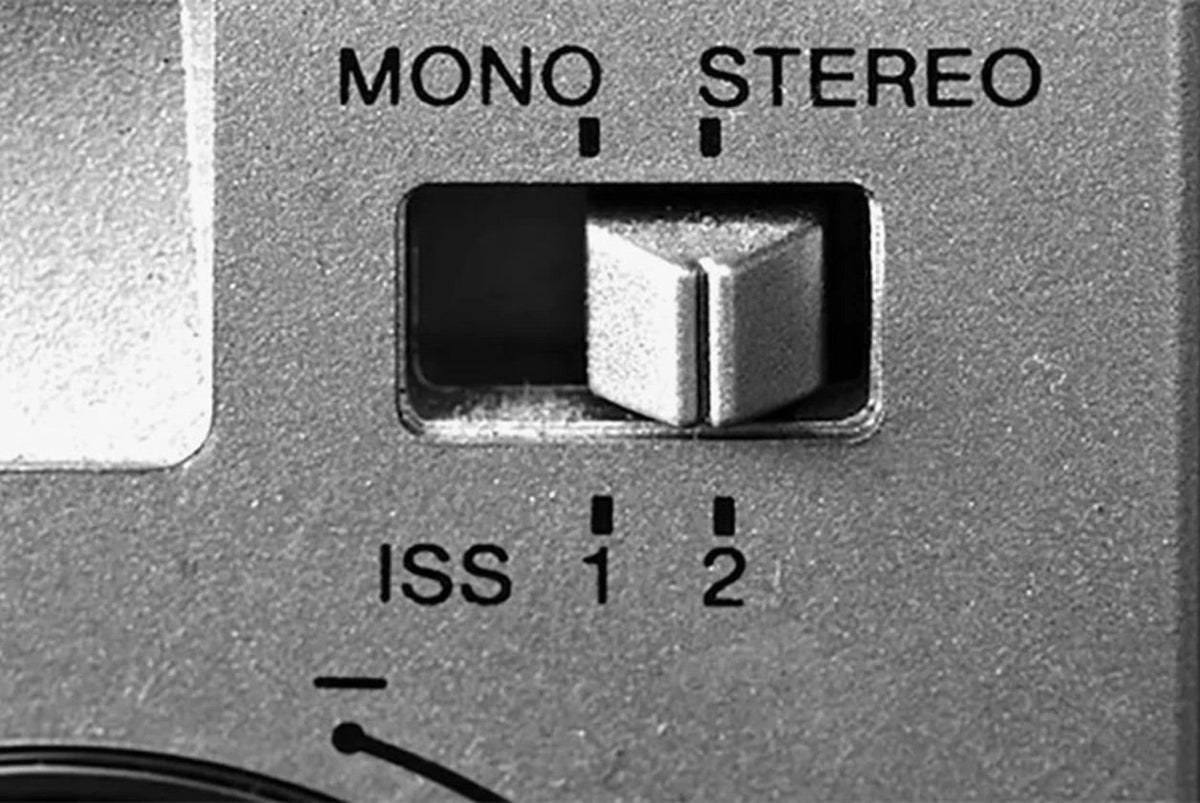
For vinyl collectors, choosing between a mono and stereo pressing can be more complicated than it first appears. Two copies of the same album may feature identical artwork, nearly identical track l...

Every vinyl record has a story beyond the music printed into its grooves. Some of that story appears on the cover, center label, and liner notes. But for collectors, some of the most revealing info...