

How to Read Vinyl Matrix Numbers and Identify Your Pressing
For serious vinyl collectors, some of the most valuable information about a record is not printed on the album cover. It is hidden in plain sight in the narrow area between the final groove and the center label. Here, you may find a combination of stamped or handwritten letters, numbers, symbols, initials, and other markings known collectively as matrix or runout information.
Learning how to read vinyl matrix numbers can help you distinguish between different pressings of the same album, investigate when and where a record was manufactured, identify mastering or cutting information, and determine whether the copy in your hands matches the edition you intended to buy.
This knowledge becomes particularly useful when shopping for rare, collectible, or original vinyl. Two records can have nearly identical covers and center labels yet come from completely different pressings. Their runout markings may reveal the difference.
However, matrix numbers are not a universal serial-number system. Their meaning varies between labels, pressing plants, countries, engineers, and periods. That is why identifying a pressing usually requires several clues rather than relying on one number alone.
This guide explains what those markings mean, where to find them, and how collectors can use them to identify vinyl records more accurately.
What Is a Vinyl Matrix Number?
A matrix number is an identifier associated with the physical production of a record. It is commonly found in the runout area—the smooth-looking section between the end of the recorded grooves and the center label.
You may also hear collectors call this area the dead wax or deadwax.
Matrix information can include a main matrix identifier as well as additional markings connected with a particular lacquer, cut, stamper, mastering facility, engineer, or pressing plant.
The exact system depends on how and where the record was manufactured.
For example, a hypothetical record might contain something resembling:
ABC-1234-A
while Side B could read:
ABC-1234-B
The letters A and B may simply distinguish the two sides. Additional numbers, letters, symbols, or initials can then identify more specific manufacturing details.
This is why learning vinyl dead wax markings explained in context is far more useful than assuming every letter has the same meaning on every record.
Where Do You Find Matrix Numbers on Vinyl?
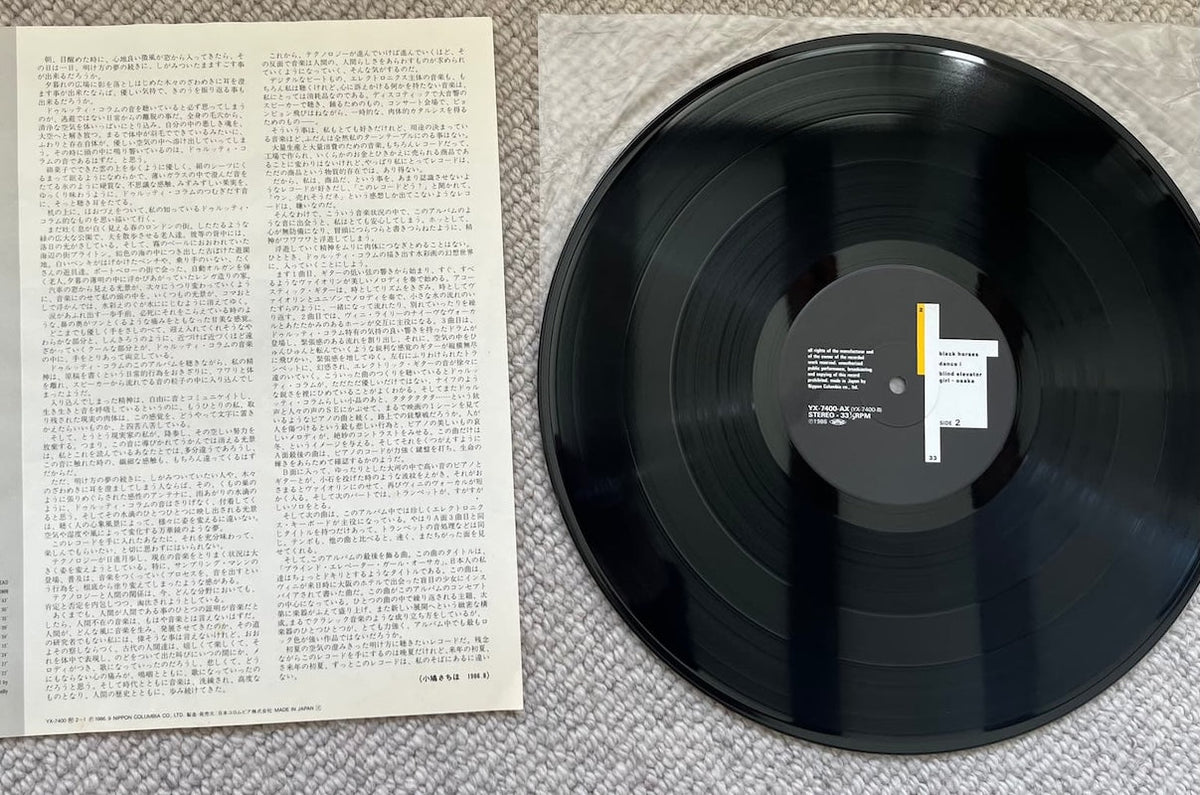
Take the record out of its sleeve and hold it carefully by the edges and center label. Look at the area immediately outside the center label but inside the final recorded groove.
Tilt the record toward a good light source.
Depending on the pressing, the information may be deeply stamped, lightly stamped, machine engraved, or handwritten into the surface. Some markings are extremely small and can be difficult to see without changing the angle of the record.
You should check both sides.
Side A and Side B normally have different runout information, and both can be important when identifying a specific pressing.
Never write on, scratch, or otherwise alter the runout area while examining it. Good lighting—and, when necessary, a magnifying glass—is usually enough.
Matrix Number vs. Catalog Number: What's the Difference?
These two identifiers are frequently confused.
The catalog number is generally assigned to a commercial release by a record label. You will often find it on the cover, spine, center label, or packaging.
The matrix information, by contrast, is associated more closely with the physical manufacturing history of the record itself.
A single catalog number may sometimes appear on multiple pressings or variations. That means finding the correct catalog number does not necessarily prove that you have a particular first pressing.
Imagine that an album was released under catalog number XYZ-100. The label might continue using XYZ-100 for subsequent production runs. The cover and labels could therefore appear remarkably similar.
Runout differences can help separate those versions.
For collectors researching a vinyl record catalog number lookup, the catalog number is an excellent starting point—but it should usually be compared with the runout information and other physical characteristics.
How to Read Vinyl Matrix Numbers
There is no single decoding formula that works for every record ever manufactured.
This is perhaps the most important thing to understand.
Different record companies and manufacturing facilities developed their own systems. A number indicating a lacquer or cut in one system might have a completely different meaning in another.
Instead of trying to interpret each character independently, begin by recording the complete inscription exactly as it appears.
Suppose you find:
ABC 1001 A-1
Write down the spaces, dashes, letters, and numbers as accurately as possible.
Then do the same for Side B.
You should also note whether each part is stamped or handwritten. That distinction can occasionally help differentiate pressings.
When researching how to read vinyl matrix numbers, think of the entire runout inscription as evidence rather than treating one isolated character as definitive proof.
What Do the Letters A and B Mean?
In many straightforward examples, A and B correspond to the sides of the record.
Side A might contain:
XYZ-500-A
and Side B:
XYZ-500-B
But this convention is not universal.
Other releases may use numerical side indicators, label-specific codes, or entirely different sequences. Double albums and box sets can become more complicated still.
Therefore, never assume that an “A” automatically indicates a first pressing. It may simply identify Side A.
This is a common mistake among new collectors.
What Do Numbers Like A1, A2 or -1 Mean?
Collectors frequently encounter endings such as:
A1
A2
-1
-2
These can sometimes relate to different cuts or lacquer generations, depending on the label's manufacturing system.
An earlier-looking sequence can be a clue to an early pressing, but it is not universal proof of a first pressing.
A record with “A1” in its runout is not automatically more valuable, older, or better sounding than a copy marked “A2.”
There are many reasons why multiple lacquers or cuts could have existed around a release. Production requirements, replacement lacquers, manufacturing locations, mastering changes, and other factors can all affect the markings.
The correct interpretation depends on the specific album and pressing history.
Stamped vs. Hand-Etched Matrix Information
Look closely at how the markings were created.
Some runout information appears mechanically stamped, producing relatively uniform characters. Other information looks handwritten because it was etched manually.
Occasionally, one record can contain both.
This difference can become a useful identifying characteristic. If a documented pressing is known to have a stamped matrix but your copy has substantially different handwritten markings, further research may be necessary.
Again, this alone does not prove that a record is counterfeit or unofficial. Manufacturing variations are common in vinyl production.
It simply provides another clue.
Look for Mastering Engineer Initials and Signatures
One of the most fascinating aspects of dead wax is that it may contain information connected with the person or facility responsible for cutting the record.
Some mastering engineers became known for adding recognizable initials, signatures, symbols, or inscriptions to lacquers they cut.
For collectors and audiophiles, these markings can be particularly interesting because different cuts of the same album can sound different.
Mastering decisions—including level, equalization, dynamics, groove spacing, and the source supplied for the cut—can influence the final listening experience.
That means two legitimate pressings of the same album may not necessarily sound identical.
Recognizing a mastering mark can therefore help you identify both the pressing and potentially the specific cut.
Pressing Plant Markings Can Provide Another Clue
Some records contain letters, symbols, numbers, or characteristic markings associated with a particular pressing plant.
These can help determine where a record was manufactured.
This matters because the same album might have been pressed simultaneously at several plants to meet demand. Copies manufactured at different facilities could share the same artwork and catalog number while having different runout information.
For collectors trying to identify vinyl record pressings, pressing-plant information can substantially narrow the possibilities.
It can be especially valuable when researching major releases that were manufactured in large quantities.
Can Matrix Numbers Tell You If a Record Is a First Pressing?
Sometimes they provide strong evidence, but rarely should they be used alone.
This distinction is crucial.
A first pressing is associated with the earliest production of a particular release, but manufacturing history can be complicated. Multiple lacquers, stampers, or plants might have been involved during the initial production period.
Therefore, there may not always be one single matrix combination that represents every legitimate first-press copy.
To determine whether a record is a first pressing, compare its runout information with several additional characteristics.
These include the catalog number, label design, country of manufacture, sleeve construction, copyright information, inserts, release date, and known pressing variations.
The strongest identification comes when all these clues agree.
First Pressing vs. First Edition
The language used in vinyl collecting can sometimes become confusing.
“First pressing” generally refers to records manufactured during the initial pressing run or earliest production phase of a release. “First edition” may be used more broadly and can sometimes refer to the first commercial version issued in a particular market.
There can also be simultaneous or near-simultaneous editions manufactured in different countries.
For example, an album may have a U.S. release and a UK release with different catalog numbers, labels, sleeves, and matrix information.
Both can be early editions, but they are not the same pressing.
This is one reason why how to identify first pressing vinyl requires more research than simply looking for the oldest date printed on the cover.
Don't Rely on the Copyright Date Alone
A very common mistake is using the copyright date as proof of a record's manufacturing date.
Suppose an album was originally released in 1972. A later pressing may still display a 1972 copyright date because that date relates to the underlying release or artwork rather than necessarily indicating when that particular copy was manufactured.
Therefore, seeing “1972” on an album released in 1972 does not automatically mean you own a 1972 pressing.
Runout information, label variations, packaging, catalog numbers, and documented release history can provide much stronger evidence.
Compare the Center Label
After examining the runout, study the center label.
Record labels frequently changed logos, addresses, typography, legal wording, colors, and design elements over time.
These changes can be extremely useful for dating pressings.
For instance, if the matrix appears consistent with an early pressing but the center label uses a design introduced several years later, the evidence does not match. You may be looking at a later pressing or another variation.
This illustrates why experienced collectors rarely authenticate a record using only one characteristic.
The matrix tells part of the story. The label tells another.
Examine the Album Cover and Packaging
Packaging can provide additional evidence.
Different editions may feature changes to printing credits, record-company addresses, logos, barcodes, sleeve construction, stickers, inner sleeves, posters, lyric sheets, and other inserts.
A barcode is an obvious clue when investigating an album originally issued long before barcodes became common on record packaging, although packaging histories vary and should always be researched for the particular release.
Even subtle changes can matter.
An original pressing and a later reissue might use almost identical front artwork while having noticeably different information on the back cover or spine.
Country of Manufacture Matters
Always determine which country's pressing you are trying to identify.
A famous album might have been released in the United States, United Kingdom, Germany, Japan, France, Canada, and other markets, each with its own manufacturing characteristics.
The U.S. pressing might have one matrix format, while the UK edition uses another.
Neither is necessarily “fake.” They are simply different releases.
Likewise, the earliest U.S. pressing is not automatically the earliest worldwide pressing.
When performing a vinyl matrix number lookup, include the country whenever possible. It can dramatically reduce the number of potential matches.
Matrix Numbers and Reissues
Matrix information is also useful for identifying reissues.
A reissue may preserve the original album artwork and even use a similar catalog number while containing different runout information.
Modern reissues may also contain additional manufacturing codes or mastering information that clearly separate them from vintage copies.
This does not make the reissue inferior.
Some modern reissues are produced with excellent mastering and pressing quality. In certain cases, collectors may even prefer the sound of a later edition.
Matrix identification is about determining what the record is, not automatically deciding which version sounds best.
Matrix Numbers and Colored Vinyl
The growing popularity of colored, splatter, marble, translucent, and other specialty vinyl makes accurate pressing identification even more important.
Color is visually distinctive, but it should not be treated as the only identifier.
Different editions can occasionally use similar colors, and photographs online may not reproduce vinyl colors accurately.
When researching limited edition colored vinyl records, compare the runout information with the official release characteristics, catalog number, packaging, and other known details.
For collectible records, the combination of physical characteristics provides a much stronger identification than color alone.
Can Matrix Numbers Help Spot Counterfeit Vinyl?
They can provide important warning signs.
Counterfeit or unofficial reproductions may have runout markings that differ from documented legitimate copies. Some might have incomplete information, unusual etchings, or manufacturing details inconsistent with the edition they imitate.
However, there is no single runout feature that proves every counterfeit.
If you suspect a record is not authentic, compare multiple elements: matrix information, center labels, artwork quality, catalog number, sleeve construction, typography, release history, and known characteristics of legitimate copies.
If several details fail to match, further investigation is warranted.
How to Research a Matrix Number Properly
A good identification process starts with the album itself.
First, determine the artist, album title, catalog number, label, and stated country. Then carefully transcribe the complete runout information from both sides.
Next, compare those details against reputable discographies, collector databases, label histories, and documented examples of known pressings.
Avoid searching only a tiny portion of the matrix because similar codes may appear across different releases.
The goal is to find a version whose complete set of characteristics matches your copy.
For particularly valuable records, it can be worthwhile to consult more than one reference rather than relying on a single database entry. Collector databases are extremely useful, but user-submitted information can occasionally contain mistakes.
Why Matrix Numbers Matter When Buying Vinyl Online
Matrix information becomes especially important when purchasing expensive records remotely.
You cannot physically inspect the record before ordering, so the quality of the listing matters.
If an online seller describes an expensive record as an original or early pressing, look for specific information supporting that description. Depending on the record's value, matrix details or clear photographs may be particularly useful.
This is one reason knowledgeable collectors search for reputable sellers when deciding where to buy rare vinyl records online.
Detailed descriptions reduce uncertainty and allow buyers to research a particular copy before purchasing.
Does an Earlier Matrix Mean Better Sound?
Not necessarily.
This is another misconception worth addressing.
An early pressing can be historically desirable, and certain early cuts are famous for their sound. But an earlier matrix number does not guarantee superior audio quality.
Sound depends on many factors, including the mastering, source material, cutting decisions, pressing quality, condition of the individual record, and playback equipment.
A beautifully mastered later reissue in Near Mint condition may provide a more enjoyable listening experience than a heavily worn original pressing.
Collectors should therefore decide what matters most to them: historical significance, rarity, sound quality, condition, or some combination of these factors.
Does an Earlier Pressing Always Mean a More Valuable Record?
No.
First pressings frequently attract collectors, but value depends on supply and demand as well as pressing identity.
Artist popularity, rarity, condition, provenance, packaging, completeness, regional variations, and collector demand can all influence value.
Sometimes a later promotional pressing, withdrawn version, unusual label variation, or extremely limited reissue can be scarcer than the standard first pressing.
Knowing the matrix number helps identify the record. Market research helps determine its collectibility and potential value.
Common Mistakes When Identifying Vinyl Pressings
Several mistakes repeatedly cause confusion among collectors: assuming A1 automatically means first pressing, relying only on the copyright date, ignoring Side B's matrix, confusing catalog numbers with matrix numbers, overlooking country-specific differences, and assuming every reissue is less desirable than an original.
Perhaps the biggest mistake is reaching a conclusion from a single clue.
Think of record identification as detective work.
The matrix, catalog number, label, sleeve, country, manufacturing characteristics, and release history should reinforce one another.
Why Learning to Identify Pressings Makes Collecting More Rewarding
Understanding runout information changes the way you look at vinyl.
A record stops being simply an album by a particular artist and becomes a specific physical edition with its own manufacturing history.
You may discover that two apparently identical records were cut by different engineers. You might find that one was manufactured at a different plant or belongs to an earlier production run.
For collectors, these discoveries are part of what makes vinyl so fascinating.
Every pressing can have its own story.
Finding Collectible Vinyl Records at STMedia
Once you understand how to read vinyl matrix numbers, shopping for records becomes a more informed experience. Instead of looking only at the artist, title, or cover, you can begin thinking about editions, pressing variations, mastering, condition, and collectibility.
At STMedia, we focus on rare, exclusive, and limited pressings you won’t easily find elsewhere. Our selection gives collectors the opportunity to explore vinyl across jazz, rock, alternative, classical, and other genres, including distinctive and collectible editions.
Whether you're searching for a particular pressing, expanding an established collection, or simply looking for an album that deserves a place on your turntable, understanding pressing details can help you make more confident choices.
Explore STMedia's vinyl collection and discover your next record.
The Dead Wax Can Tell a Story
Learning how to read vinyl matrix numbers is one of the most useful skills a serious collector can develop. The letters, numbers, stamps, signatures, and symbols hidden in the dead wax can provide valuable clues about where a record came from and which pressing you actually own.
But the golden rule is simple: never identify a pressing from the matrix alone.
Combine runout information with the catalog number, center label, sleeve, country, release history, and known manufacturing details. When those characteristics line up, you can identify your record with far greater confidence.
The next time you pull an album from your collection, don't look only at the cover. Tilt the record toward the light and examine the space beside the label. Those tiny markings may reveal far more about your vinyl than you expected.
Read more

In a world where music is often reduced to a fleeting stream of data, vinyl records offer something deeply human and comforting. There’s a warmth, a familiarity, and an emotional depth to analog so...
For vinyl collectors, the country where a record was manufactured can be just as interesting as the music pressed into its grooves. Among the many international editions available, Japanese vinyl p...